Category Archives: Uncategorized

Archiving 2026: Camera and Scanner Imaging Performance Workshop

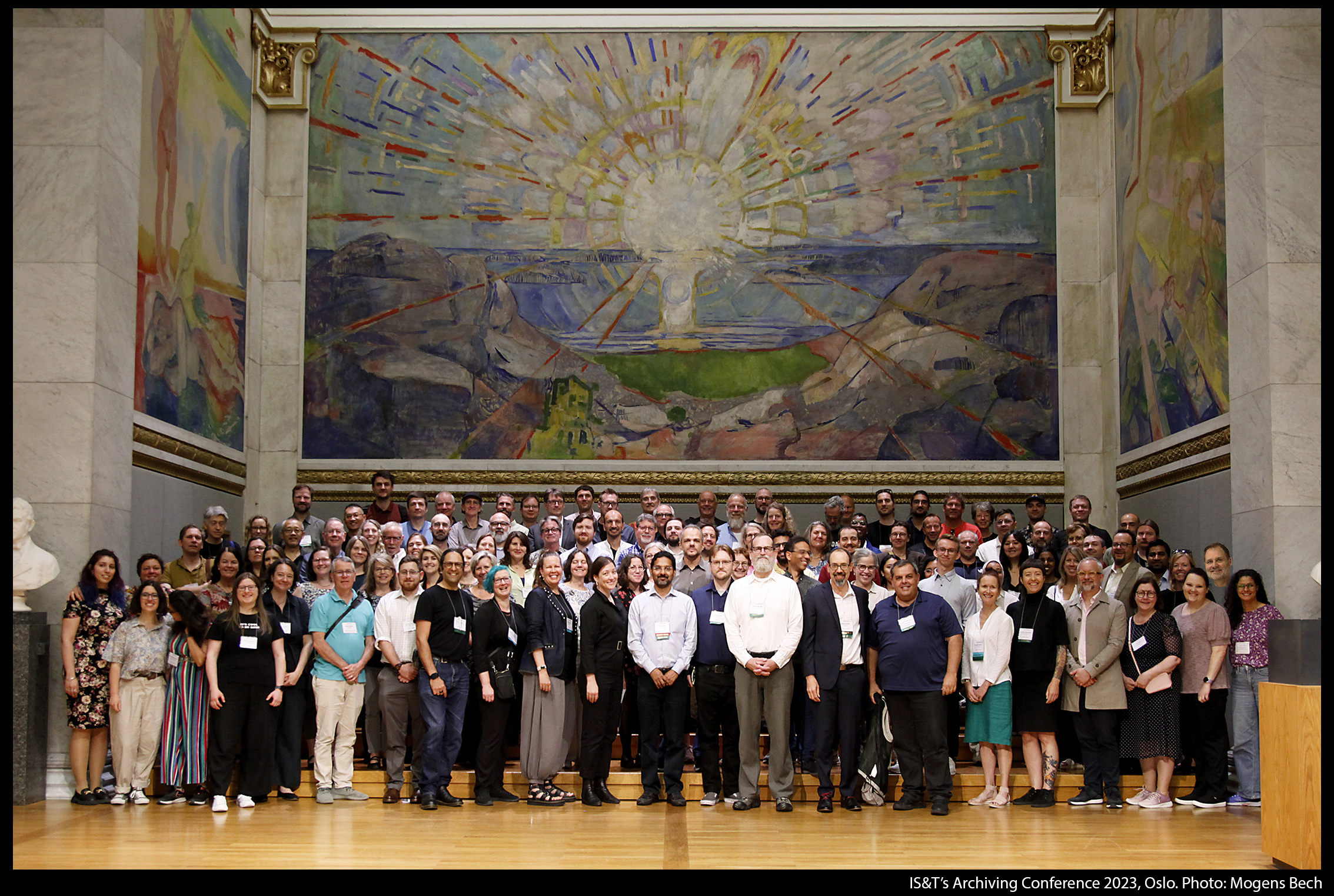
At IS&T’s Archiving 2026 Conference in Boston, Don Williams and I will be presenting our workshop. Here are the areas that we plan on covering.

This is a theory-to-practice workshop with emphasis on practice. The lecturers have more than fifty years of combined digital and analog imaging experience with ISO standards, industry, and large international libraries. We will be using Golden Thread NXT software and Photoshop for demonstration purposes
Primer on performance metrics
– Accuracy vs. consistency. What’s more important ?
– What exactly is being evaluated and why do things go wrong
– Can we create our guidelines ?
– How to recognize camera hardware from image processing influences.
– When to overlook certain imaging performance problems.

You can observe a lot just by watching.
 -Learn how to visually detect JPEG, de-mosaicing, oversharpening, and noise cleaning artifacts that are not addressed in today’s current guidelines.
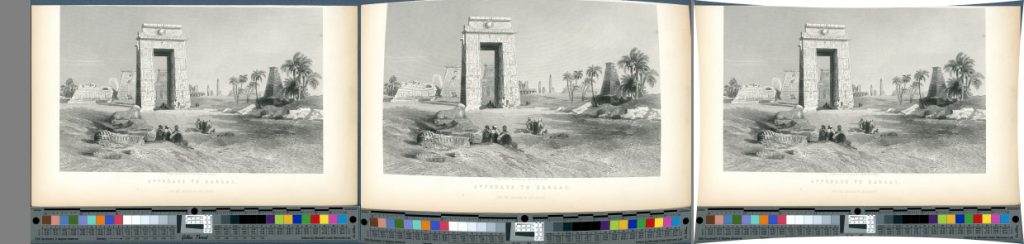
Color profiling
– Simple ways to think of color profiles. It’s not complicated.
– The underlying variables in creating color profiles
– The difference between a color profile and a color space and how to connect them.
 -What are the benefits, or not, of separate profiling and verification targets?
– How can multiple target scans be combined into a single super profile.
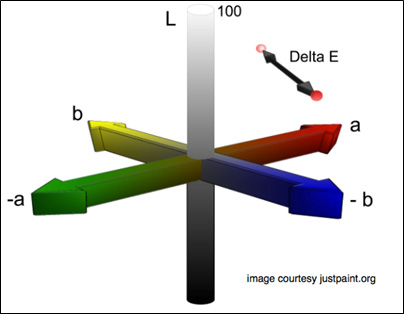
– Understand how lighting illuminants, especially LEDs, can dramatically influence the true colorimetric (Lab, and XYZ) values that color profiles are built upon.
– How color profiling can improve goodness ratings or introduce artifacts
– How does today’s LED lighting influence true colorimetric (Lab or XYZ) values
Spatial Frequency Response
– How to interpret them and how they can vary.
– Methods for using resolution wedges for identifying de-mosaicing artifacts
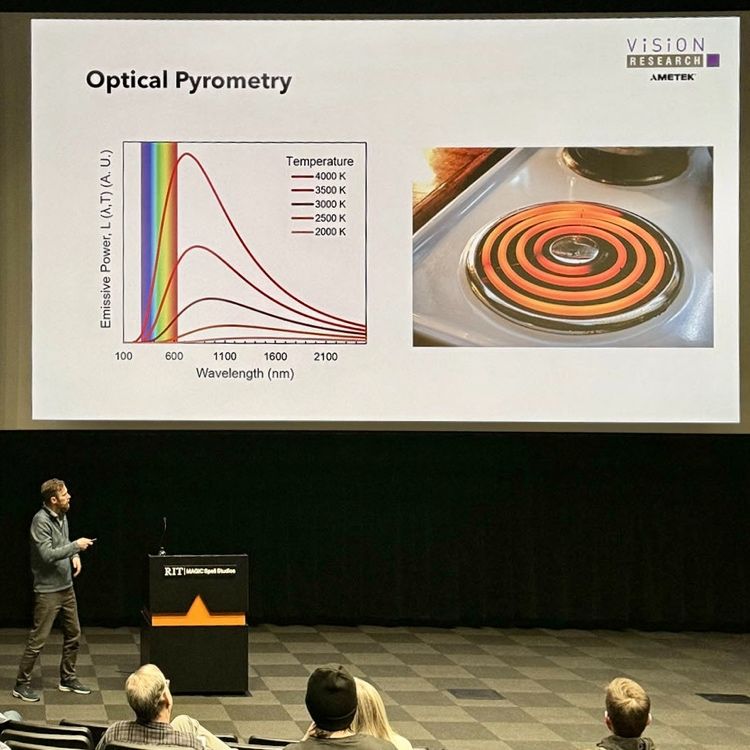
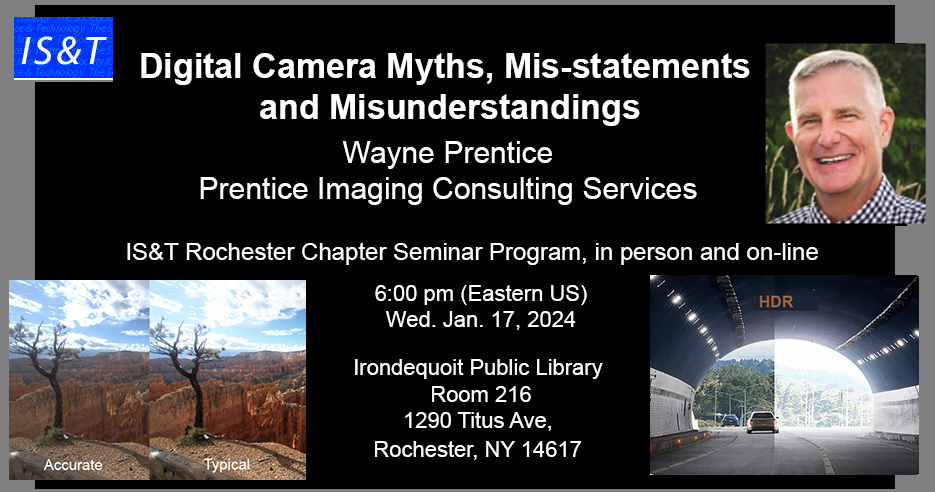
Video Presentation: Digital Camera Myths, Mis-statements, and Misunderstandings

Recently Wayne Prentice presented, Digital Camera Myths, Mis-statements, and Misunderstandings, at the Society for Imaging Science and Technology (IS&T) Rochester NY chapter seminar series. Wayne addressed,
– Image noise
– ISO Speed
– Analogue vs. digital gain
– Colour accuracy or ?
– Machine vision aims (human-like)
– ‘HDR’ and real HDR
– Mobile phone as good as a DSLR camera?
(54 minutes)

Here is the video,

Digital Camera Myths, Mis-statements, and Misunderstandings

On Wednesday, 17 Jan. 2024 Wayne Prentice will be presenting as part of the Society for Imaging Science and Technology (IS&T) Rochester NY chapter seminar series. This meeting will be hybrid; in-person, and by Zoom video conference.

Place: Irondequoit Public Library, (Room 216) 1290 Titus Ave, Rochester, NY 14617 (in person) Time: 6:00 pm
On-line: https://lnkd.in/gg8vxVj2 (Meeting 859 2672 3473)

The digital cameras are deceptively complex. Understanding camera operation/design requires some knowledge of the parts, including, radiometry, optics, sensors, sensor design, image processing, color science, perception, and image/video encoding. It is easy to miss something.

This talk was inspired by interactions with co-workers and clients. I have observed that subtle, yet important, points when missed can lead to suboptimal product and design decisions. The goal of this talk is to fill in some of those gaps.

Wayne has worked in the imaging industry for over 35 years, for systems ranging from X-ray, CAT scanners, MRI, extra-terrestrial imaging, and digital cameras. Much of his digital camera experience came from 17 years working at Kodak R&D, for digital cameras. At Kodak Wayne became the lead image scientist and manager for Digital Camera R&D group. He has worked as an independent contractor over the past 5 years, providing solutions to a wide range of imaging challenges, mostly developing custom camera applications, computer vision, and HDR imaging.

Super-Resolution: Computational and Deep Learning-Based Approaches

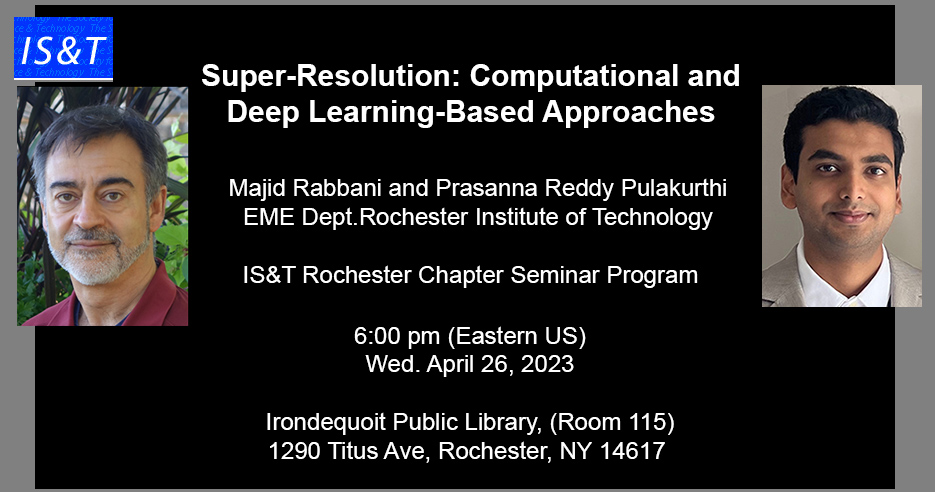
On Wednesday, April 26, 2023, Majid Rabbani and Prasanna Reddy Pulakurthi presented as part of the Society for Imaging Science and Technology (IS&T) Rochester NY chapter seminar series.

Abstract: Super-resolution refers to obtaining an image higher than the camera sensor’s resolution. Super-resolution can be applied to a single low-resolution image or a single frame within a low-resolution captured sequence. The approaches can be either computational-based (using physical modeling of the capture process, subpixel motion estimation and image registration, and regularized spatially variant deblurring) or example-based using machine learning and deep convolutional networks. This presentation provides a brief overview of the field’s history and evolution while addressing its challenges and future directions.

Video file of the presentation (YouTube), https://youtu.be/czlEG-QkKRI

Presentation File (PDF), /burnsdigitalimaging/ISandT/ISandT%20Super-Resolution%20Rabbani%20and%20%20Pulakurthi%20.pdf

L’Oréal Skin Color Chart, Colour Coordinates, Dermatology (updated)

chart1

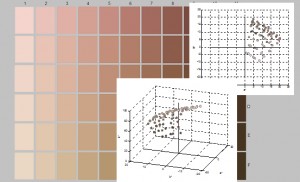
Skin Color Chart and CIELAB coordinates

Some time ago L’Oréal* developed a colour chart showing various shades of skin colour, based on a sampling of the spectral reflectance characteristics of women’s (healthy) skin around the world.

For a current project, we are addressing the requirements for, and control of, image capture for dermatologists. By understanding important optical (colour) characteristics for this imaging application, we can tailor system design and evaluation methods for improved performance. The chart and similar databases can provide information on system tolerances, and sources of variability.

Report: A short report on the region of (colour) signal-space occupied by the chart is available here, Coordinates of L’Oréal Skin Color Chart (updated) (PDF)

Color Chart: L’Oréal webpage, A new geography of skin color
_____
*L’Oréal Paris, the cosmetics company

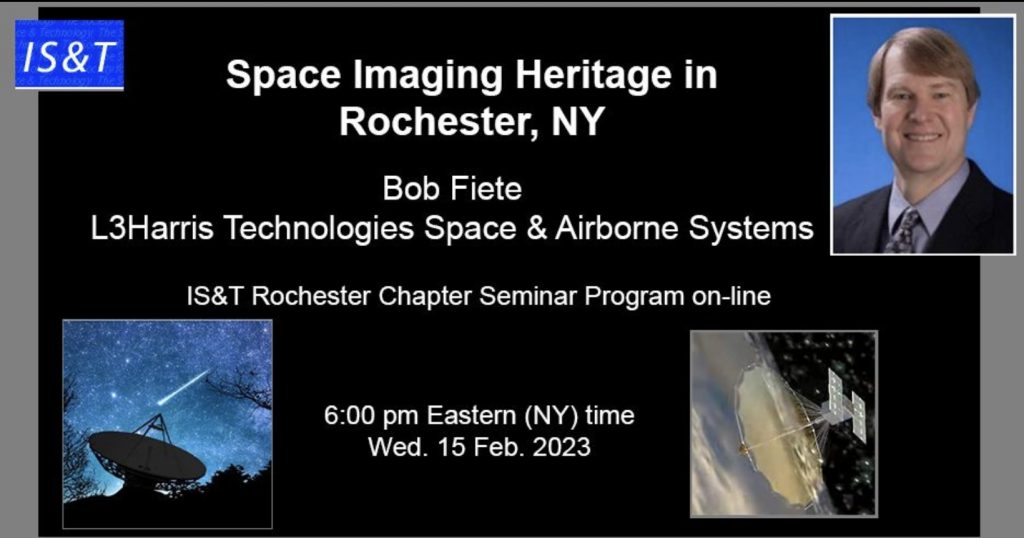
Space Imaging Heritage in Rochester NY

On 15 Feb. Bob Fiete presented a talk as part of the Society for Imaging Science and Technology (IS&T) Rochester NY chapter seminar series.

When we see the images taken from satellites on the evening news, from the Russian invasion of Ukraine to the distant galaxies captured by the James Webb Space Telescope, most people don’t realize the significant role played by a group of talented people in Rochester, NY to make these images a reality. This talk will look at the history of imaging technologies and the pioneering accomplishments in Rochester, NY that give us these amazing images from space.

Dr. Bob Fiete is Chief Technologist and Senior Fellow at L3Harris with over 40 years of experience in imaging science. He was Director of R&D for ITT Space Systems Division and has chaired conferences and seminars on imaging and optics. He has briefed the White House and US House of Representatives, and worked with law enforcement on cases image exploitation.

Here is the video,

https://youtu.be/5hfotnao6to

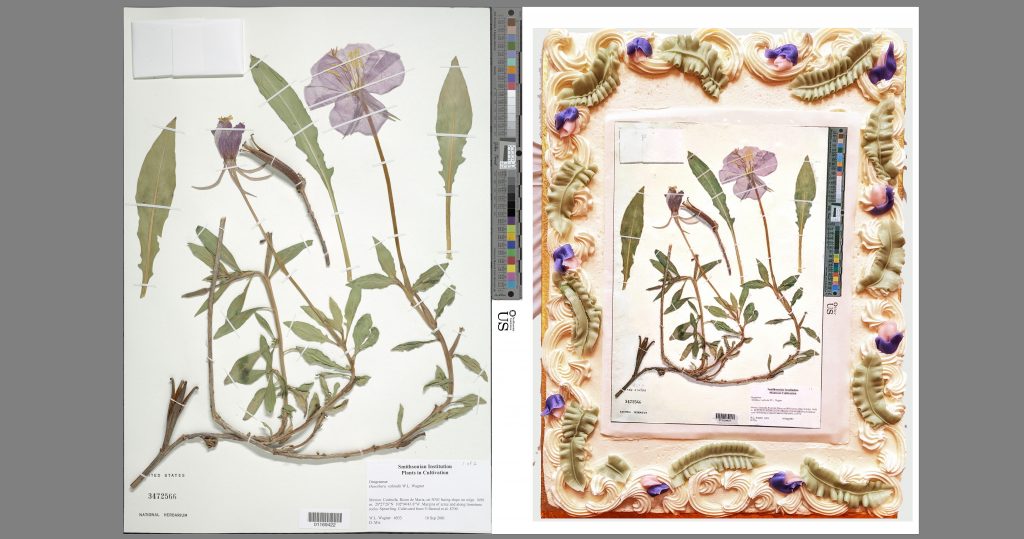
Herbarium Project Cake

As Society for Imaging Science and Technology (IS&T)‘s Archiving conference opens tomorrow, a reminder of the scope of imaging projects for collections.

From Don Williams, part of the Smithsonian Institution‘s celebration of their National Herbarium Collection Digitization Project (4 million items scanned). Cake (right), and the item (left) I found based on the cake’s ‘metadata’. Cake photo courtesy of Ken Rahaim.